 on April 2, 2026
The hard part of SEO for a brand-new website is knowing where to start. Most small businesses publish their site and spend the next few months wondering why nobody is finding them on Google, despite doing everything they were told to do.
That frustration is common. We’ve even worked through that exact problem with businesses all across Australia, and the answer consistently comes back to a handful of local SEO tips applied in the right order. Basically, if you get those foundations right, the search results follow.
This article covers local search basics, meta tags, reviews, link building, and what to realistically expect in the early months.
If you are starting from zero, keep reading.
What Search Engines Look for on a New Website

Search engines evaluate every new site on three things: crawlability, content structure, and relevance. When any of those are off, your site can sit buried in search results for months.
Let’s discuss the three areas in detail:
- Site Structure: Your pages need to link to each other logically. We say this because when crawlers can follow a clear path through your site, they index more of it. And more indexed pages mean more chances to show up in search results.
- Technical SEO: Make sure you submit an XML sitemap through Google Search Console the day your site goes live. It sounds minor, but a missing sitemap is one of the most common reasons new sites stay invisible for months.
- Content Relevance: Search engines compare your page against thousands of similar ones. What’s more, answering the search query directly and in full is what separates pages that rank from pages that sit collecting dust.
And honestly, these issues are far more common than they should be. On top of that, early fixes save months of lost rankings.
How to Set Up Your Business Information So Local SEO Works
To set up your business information for local SEO, start with your Google Business Profile, then work through your directory listings. While these aren’t complicated, you would be surprised to see how many local businesses in Australia have never done either properly.
So, start with these three:
Google Business Profile
As we mentioned earlier, your Google Business Profile is where local SEO starts. You must fill in every field: your business name, address, phone number, website, and business hours. Keep in mind, a complete profile gives Google everything it needs to show your business to nearby searchers.
Directory Listings
Directories are a second source of truth for search engines. Your business name, address, and phone number must match your Google profile exactly across every listing. Even a slightly different phone number can drag down your local search rankings (we’ve seen a Brisbane café listed in regional Queensland twice).
Physical Location Signals
Your physical location tells Google which local searches your business is relevant for. To strengthen those signals, remember to mention your suburb in your Homepage copy, your About page, and any service pages. M
Frankly, getting these three things right puts you ahead of most local businesses before you have written a single word of content.
Meta Tags and Meta Descriptions That Get Clicks
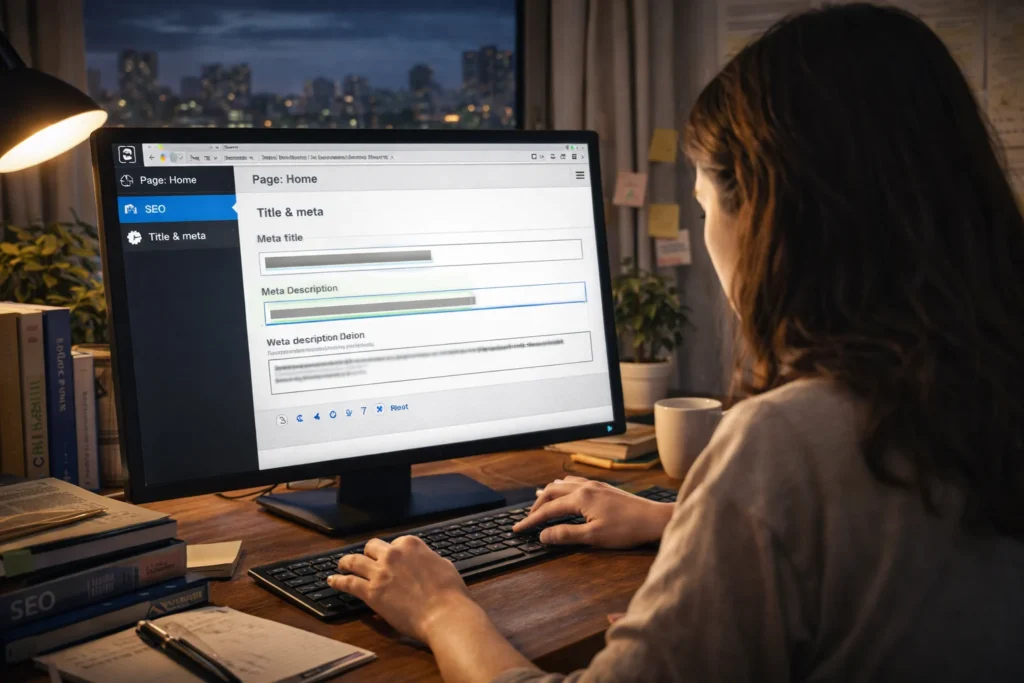
Meta tags and meta descriptions are the first things a searcher sees before visiting your site. Yet most new websites leave them blank, which makes your listing look unfinished next to every competitor sitting above you in search results.
Well, let us explain. Your meta description is the two-line summary underneath your page title. We recommended keeping it under 160 characters and writing it like a short pitch. In short, be specific about what the page covers, and make every word count.
Every page needs its own unique meta tags. When multiple pages share the same description, search engines struggle to tell them apart. That confusion compounds across your entire site over time, and your rankings suffer for it (First impressions count, and meta tags are often yours).
How to Match Your Content to Search Intent
To match your content to search intent, you need to understand what the searcher wants before writing a single word. If you get the format wrong, your page will not rank.
Here are three things worth focusing on:
- Search Intent: A person searching “emergency plumber Brisbane” wants someone to call right now, not a how-to article. With that in mind, match the format of your page to what the searcher wants. Do that consistently, and Google will have a much easier time ranking your content correctly.
- Keyword Research: Specific phrases like “accountant Fortitude Valley” almost always outperform broad terms like “accountant Brisbane.” The competition is lower, and the searcher is far closer to making a decision.
- Relevant Keywords: Always place your target keywords in your page title, your first paragraph, and at least one subheading. Beyond that, read the page out loud. If a keyword feels forced in a sentence, rewrite the sentence around it until it sounds natural.
When your content matches the search intent, the right potential customers start finding you instead of your competitors.
Your First Links and Where to Find Them
A new website with no links is like a new shop with no signage. Nobody knows it exists. For instance, links from reputable websites signal to search engines that your site is worth paying attention to, and for a brand-new site, even a handful of quality ones can shift your search rankings noticeably.
For most new sites, these four sources are the best place to begin:
Source | Why It Helps |
Local business directories | Builds consistent citations and strengthens local search visibility |
Industry associations | Links from trusted organisations carry real weight with search engines |
Supplier or partner websites | Relevant links from businesses in your industry signal credibility |
Local community groups | Sponsorships and local involvement often earn natural, genuine links |
A few quality local backlinks will do more for your search rankings than a long list of irrelevant ones. In fact, you should focus on sources your potential customers already trust and visit regularly.
Those early links carry more weight than most new site owners expect, and they build on each other as your site grows (One solid local link beats ten from sites nobody visits).
How Online Reviews Affect Your Local SEO Efforts

Online reviews improve your local SEO efforts by sending direct trust signals to Google about your business. The more recent and consistent your reviews are, the more confident Google feels in showing your business to people searching nearby.
This is what it looks like when you get it right:
- Google Maps Rankings: Google uses review quantity, recency, and rating to rank local businesses. For example, a business with ten fresh reviews from the past month will almost always outrank one with ten reviews from three years ago.
- Responding to Reviews: Reply to every review. It signals to Google that your listing is actively managed and your business information stays up to date. Businesses that respond consistently hold stronger local search rankings over time.
- Encouraging Reviews: After completing a job, send a direct link to your Google Business Profile review page. A short, friendly request at the right moment converts far better than a generic reminder.
A steady flow of reviews is one of the simplest ways to strengthen your local SEO efforts over time.
The First Step Is Always the Hardest
Search visibility does not come from guesswork. It comes from consistent, focused action on the right things. And every business that ranks well today started exactly where you are now, with zero traffic, zero reviews, and a brand new site nobody had heard of.
In this article, we’ve walked through the core foundations: your Google Business Profile, meta tags, search intent, local backlinks, and online reviews. Together, these steps give search engines a clear reason to show your business to the right people.
Our team at Plugins Electronix has been guiding Australian businesses through every stage of their SEO journey since 2011. Put your trust in people who have done this before, and let us take it from here.
Your search results are waiting.