 on February 20, 2026
Not every business approaches SEO with the same playbook. A global brand with thousands of pages is essentially playing chess, thinking ten moves ahead. Meanwhile, a local tradie in Brisbane is playing a completely different game, with different rules and a much smaller board.
That’s not a knock on small businesses. It’s just the reality of how enterprise SEO and small business SEO are built around different goals, different tools, and different definitions of winning.
So what actually separates the two approaches? And more importantly, what does that mean for your business? This article breaks down those differences and what smaller businesses can realistically take from enterprise-level strategy.
Enterprise SEO Strategy: What Makes It a Different Game
Enterprise SEO and small business SEO operate on completely different levels of scale and structure. That gap shapes everything, from the tools each side uses to the strategies that actually work. Here’s what that looks like in practice.
Scale Creates Different Challenges

Enterprise sites manage 10,000 or more pages (sometimes millions). Every template change, redirect rule, or meta tag update affects hundreds or thousands of URLs at once. One bad template update can break internal links across hundreds of product pages before anyone notices.
That scale demands different tools and processes. Crawling a 50,000-page site needs enterprise-level software like Botify or Lumar (previously DeepCrawl), not the standard tools built for smaller sites. Manual audits become impossible, so you need automated monitoring to catch issues like duplicate content, broken links, or indexation problems early.
Technical SEO becomes a dedicated role rather than a side task. That means someone needs to own site architecture, coordinate with development teams, and make sure schema markup scales properly across the site. Miss this, and technical debt piles up fast.
Small-Business SEO Prioritises Speed Over Scale
The advantage small businesses have is speed. You can adjust strategy, update content, or shift keyword targets without waiting on five departments. Spot a trending search term? You can publish targeting content the same week.
That agility means picking battles carefully. You can’t chase highly competitive keywords, so instead, focus on those that deliver measurable impact. These efforts are specific, trackable, and don’t require enterprise budgets to succeed.
The trade-off is doing more with less, which means no dedicated technical SEO team or enterprise tools. But for local businesses or niche markets, that focused approach often outperforms enterprise competitors who move more slowly despite bigger budgets.
Chess Moves Big Brands Make That Small Businesses Can’t Copy

A company like Nike can publish 500 pages of content this month and barely blink. For most small businesses, that’s a year’s worth of work. Here’s what enterprise brands are actually doing differently:
- Broad Keyword Targeting: Enterprise brands go after broad, competitive keywords because their domain authority can support it. For example, a site like Adobe ranks for millions of search terms simply because Google already trusts it. That kind of brand authority takes years to build.
- Content at Scale: You’d notice this if you check the sitemap of brands like Ahrefs or HubSpot. They publish dozens or hundreds of optimised pages every month, backed by dedicated content teams and real budgets. Each new page targets a different keyword, so their organic traffic keeps growing without slowing down.
- Enterprise Tooling: Most small businesses can’t afford the platforms big brands rely on. Tools like Semrush Enterprise and BrightEdge give enterprise teams a bird’s-eye view of their entire site’s SEO performance. They track thousands of keywords, flag technical issues automatically, and generate reports that would take a small team weeks to put together manually.
The goal isn’t to match what big brands spend. It’s to know where your effort is better placed.
Playing Smarter, Not Bigger: SEO Strategies for Small Businesses
Small businesses win SEO by going narrow, not broad. A Paddington plumber doesn’t need to rank for “plumbing services Australia” (dominated by national franchises). They need “emergency plumber Paddington” or “blocked drain Brisbane northside.” These terms have lower search volume but higher intent and zero competition from businesses 500km away.
Local SEO helps you rank for these hyper-local searches in three ways:
- Google Business Profile Optimisation: Complete your profile with photos, accurate hours, service areas, and regular posts. These signals improve your chances of ranking in the local map pack, the top three results with maps that appear above organic listings. In fact, businesses in the map pack receive 126% more traffic and 93% more actions than those ranked 4 to 10, according to Soci.
- Consistent Local Listings: Your business name, address, and phone number must match exactly across Google, Yelp, True Local, and other directories. Inconsistencies confuse search engines and hurt your local rankings. To avoid this, audit your listings quarterly and sort any discrepancies before they cost you.
- Location-Specific Pages: Want to show up when someone searches “plumber near me” in your area? Create dedicated pages for each service area you cover (e.g., “Emergency Plumber Paddington” or “Blocked Drains Brisbane Northside”). Each page should feature nearby landmarks, detailed service information, and one focused suburb per page.
The payoff? You dominate your corner of search. National brands often can’t match your local relevance, and customers searching locally find you first. That’s more valuable than page 3 rankings for national terms.
Link Building, Schema Markup, and Analytics: Get These Right First
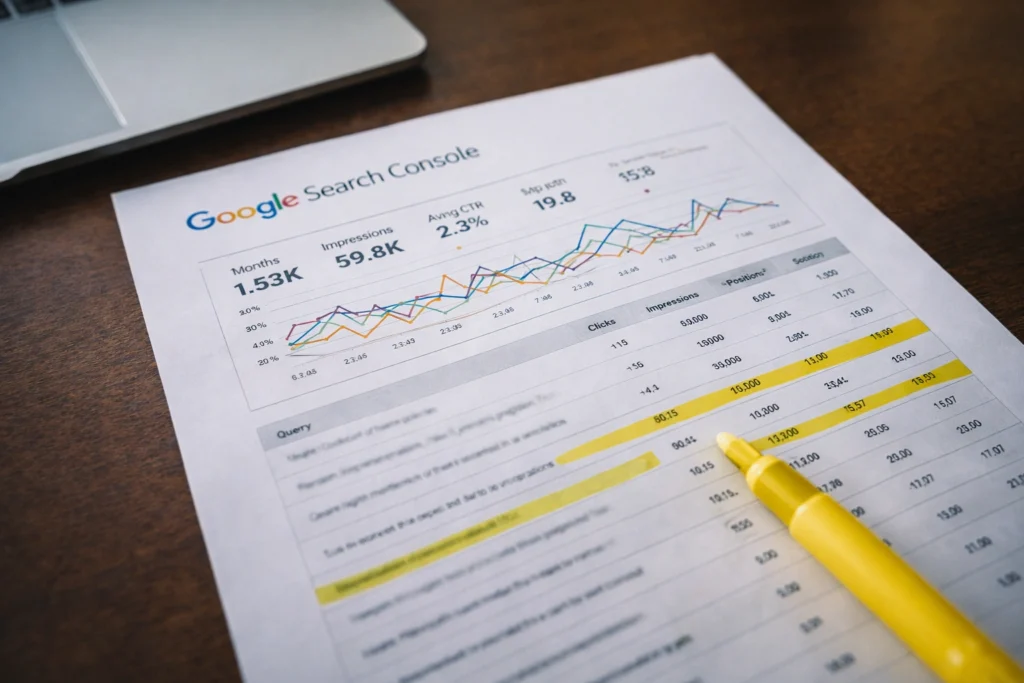
Some SEO fundamentals deliver results at any business size. Here’s a quick breakdown of the ones worth getting right first:
| SEO Fundamental | What It Does | Why It Matters |
| Link Building | Earns links from other reputable sites back to yours | Builds domain authority and trust with search engines |
| Schema Markup | Adds structured data to your pages | Helps search engines understand your content and improves how you appear in search results |
| Meta Descriptions | Summarises your page content in search results | Improves click-through rates from search engine results pages |
| Core Web Vitals | Measures page speed and user experience signals | Directly affects your rankings and how Google scores your site |
| Google Analytics | Tracks website traffic and user behaviour | Shows which pages drive results and where visitors drop off |
| Google Search Console | Monitors your site’s presence in Google search | Flags indexing issues, keyword rankings, and technical errors |
Two of these deserve more attention: schema markup and link building.
Schema markup labels your content so search engines understand exactly what they’re looking at. A local business using schema can display star ratings, opening hours, and service areas directly in search results before anyone clicks through. For small businesses competing with national brands, that extra visibility in search results often means the difference between getting the click or being ignored.
Link building works similarly at any scale. Earning links from reputable sites signals to Google that your content is worth trusting. You don’t need hundreds. A handful of quality links from local directories, industry associations, or relevant Australian publications can improve your rankings noticeably. Quality beats quantity every time.
Can Small Businesses Ever Compete With Big Brands in Search Results?

Yes, but not on the same terms.
Small businesses won’t outrank national brands on broad searches like “plumbing services” or “accounting software.” Enterprise brands have years of domain authority, massive content libraries, and budgets small businesses can’t match. Competing there is a losing battle.
But local searches? That’s where small businesses win. A Brisbane plumber optimising for “emergency plumber Paddington” or “blocked drain Newstead” will, in many cases, outrank national franchises. Big brands simply can’t compete with genuine local relevance.
The businesses that tend to win focus on:
- Hyper-local keywords with buying intent
- Google Business Profile optimisation
- Consistent local content and citations
Broad national terms are a tough game for small businesses. The smarter move is owning the local searches that actually bring in customers.
Know Your Game, Then Win It
You now know the difference between enterprise and small business SEO. The question is: which game are you playing?
If you’re running an enterprise site, focus on systems, governance, and tools that scale. Running a small business means owning your local market with hyper-specific keywords rather than competing where bigger budgets always win.
Ready to build an SEO strategy that fits where you actually compete? Get in touch, and we’ll show you what to prioritise first.